


 Log In
Maple Creek Town Council: Debate over water usage, sewer services
Posted on September 8, 2026 by Ryan Dahlman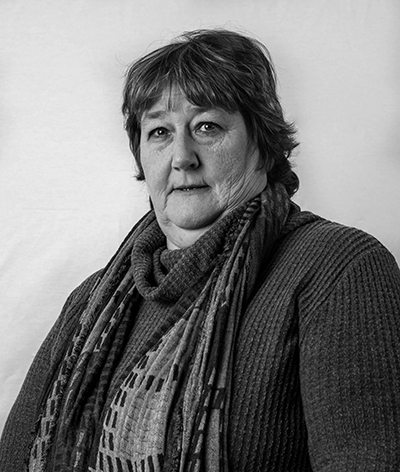 Betty Abbott
Maple Creek News
The first reading of a bylaw to set regulations and rates for water usage and sewer services was put off for further discussion.
The Water Bylaw was on the agenda of the August 27 Town Council meeting.
However, after a debate that lasted nearly 30 minutes, it was agreed to send the bylaw back to committee for a more detailed conversation.
First, second and third readings of The Water and Sewer Bylaw are on the agenda for Wednesday’s (September 9) Town Council meeting.
The proposed bylaw covers quarterly water fees, bulk water rates, quarterly sewer infrastructure fees, for the period up to 2029.
Increases are suggested for each year.
Under the heading of quarterly water fees, single, multi residential, and commercial/industrial infrastructure fees are put forward, which go from $116.20/quarter effective October 1, 2026 to $157.60/quarter effective October 1, 2029.
Other subjects in the suggested bylaw are outdoor watering restrictions, applications for utility service and to disconnect water service, and a new lawn watering permit.
Under the bylaw, default in the payment could result in water supply being shut off. There is a caveat to this, which states: “During the period October 31 and May 1, and in recognition of potentially cold weather, water supply to individual properties shall not be turned off by the Town. Instead, all arrears incurred during this period shall be compiled and processed in the usual manner, including the shut off of service, following the conclusion of this period of time.”
Much of the Council discussion was about getting the balance right between the Town of Maple Creek users and RM of Maple Creek users, and being good neighbours.
Councillor Betty Abbott said she had looked at a lot of numbers, comparing rates, while taking into account that the Town of Maple Creek has to recover costs.
She suggested that water users get a flat rate card.
Councillor Tina Cresswell said she had thought a lot about the issue.
“It is hard for me to make comparisons between Town and RM. And it is hard for me to make estimates of usage, because I don’t know what the RM users use it for, and there is no judgment here.
“But I do know that the Town ratepayers absorb all of the cost of the maintenance and any infrastructure upgrades, any computer upgrades, any kind of system upgrades, plus the pipes, of course, that we talk about that are showing wear and tear, without help from the RM. This is a philosophical thing for me. How do we share the facilities and services that we have in a fair and reasonable fashion with the people who do not pay taxes in our town? And I’m not sure I am able to come to grips with that without some substantial conversation.”
Michelle McKenzie, the mayor, liked the way the bylaw reads, even though increases were proposed.
She said infrastructure costs had to be borne in mind. For example, $8,000 was spent on a filter at the water treatment plan.
“We are going to have to probably replace four of them.”
McKenzie said she had researched the issue by phoning high water users.
“Our mandate needs to make sure that water is self-sufficient, it has to pay for itself, and we have been in the red for the past two years.”
Any rates agreed by Council after third reading will have to be approved by the Ministry, she said.
“The ministry will tell us whether we are gouging people or not, or it’s too much, if it is an increase, and it is fair and equitable …”
McKenzie said some ratepayers did not know that it wasn’t the Town’s responsibility to provide treated water to the RM.
“So, I did encourage them to speak to their RM Councillors to see whether there is partnership that is coming through so we can share some costs and whether this might come down.”
Councillor Mike Stork, who has sat on Council before, recalled a long discussion on water 30 years ago.
“It was brought up that we are in the business of selling water, which is one way of looking at it, right?
“The problem, of course, is that we are in a desert and we have a certain amount of supply, and one of the concerns at that time was if we are providing water and obviously we want to, we want to be good neighbours, right? We want to be able to provide water when we can. But if we provide water without any regulation as to what can be done with that water, and somebody becomes dependent on it to keep a small herd of cattle alive, and we go into serious problems of being able to provide water for our townspeople, and then turn off the supply of water or vastly reduce it to RM users, are we now responsible for the death of that herd?”
McKenzie said Councillor Stork had raised a good question “because when we had to reduce water at the haul station, we had a lot of RM ratepayers calling because they needed it”.
Councillor Stork appreciated the amount of research put in by Councillor Abbott, but said he needed more time to go over some numbers.
“We are doing this on a cost recovery basis.
“We also want to be good neighbours. But we also need to consider possible constraints or at least an awareness that if there is a substantial decrease to our supply of water, people come first. And if that means the loss of your business, I am sorry.”
McKenzie believed a flat rate would help with maintaining infrastructure.
Councillor Cresswell said that an agreement with the RM had to be formalized.
“There is something wrong if our people at some point go without water because we are serving the RM.”
Councillor Corrine Collura said a larger conversation needed to be held about water security, wells, and water storage.
Councillor Stork commented about water security and what water was being used for.
“There is going to be a whole lot of people in town angry at us, if they are listening, about the possibility of that treated water going to water cattle when we are telling them not water their grass.
“So, we need to keep that in mind. So, I think we need to talk about the potential of what restrictions might look for the people in the RM if it came to that. And again. we would rather not. But if we have to, they need to understand that we may close the water off to a degree where it is only household water if we need to do that.”
Councillor Abbott said that if users got a card, they would sign up for a service.
As the discussion continued, Barry Elliott, the Town’s chief administrative officer, suggested that the topic of water, and the bylaw, be moved back to committee.
McKenzie agreed.
“I do not want the burden to lie solely on the Town of Maple Creek.”
Leave a Reply
You must be logged in to post a comment.